Robots in Fiction: How They Reflect and Shape Our Society
Introduction: The Rise of Robots in Fiction and Artificial Intelligence
Robots and artificial intelligence (AI) in fiction are more than just fascinating characters—they mirror humanity’s greatest hopes, fears, and ethical challenges. For decades, stories in literature and film have imagined AI as both a utopian ally and a dangerous adversary.
In this guide, we’ll explore famous robots in fiction, from ancient myths to modern AI narratives, and reveal what these stories tell us about society’s evolving relationship with technology.
From Mythology to Modern Robots in Fiction
Ancient Myths and Early Artificial Beings
Long before the term “robot” existed, myths gave us beings like Galatea from Greek mythology and the Jewish golem. These tales reflected both our fascination with creation and our fear of “playing god.”
Mary Shelley’s Frankenstein and Scientific Responsibility
Mary Shelley’s 1818 novel introduced the concept of an artificial being as a cautionary tale. Frankenstein’s creature raised questions about empathy, responsibility, and the dangers of unchecked ambition—concerns still relevant to AI today.
The Birth of the “Robot” in Literature
Karel Čapek’s R.U.R. and the Rise of the Robot Revolution
In 1920, Czech playwright Karel Čapek coined the term “robot” in Rossum’s Universal Robots. His story depicted artificial humans rebelling against their creators—a metaphor for industrial fears that still resonate today.
Shaping AI Ethics Through Fiction
Isaac Asimov’s Three Laws of Robotics
Asimov’s 1942 I, Robot introduced rules to keep robots from harming humans, inspiring real-world AI ethics research. His work balanced optimism with complex moral dilemmas.
When AI Turns Against Humanity
HAL 9000 in 2001: A Space Odyssey
HAL’s calm but deadly logic showcased fears about autonomous AI making decisions beyond human control.
Modern Portrayals of AI in Fiction
Wall-E: Environmental Stewardship Through Robotics
Wall-E reflected hope for using technology to heal environmental damage while warning against consumerist habits.
Ava in Ex Machina: AI Autonomy and Manipulation
Ava’s escape highlighted debates about consciousness, free will, and AI rights.
Westworld Hosts: The Ethics of Sentient AI
The hosts’ rebellion forced audiences to consider whether AI beings deserve the same rights as humans.
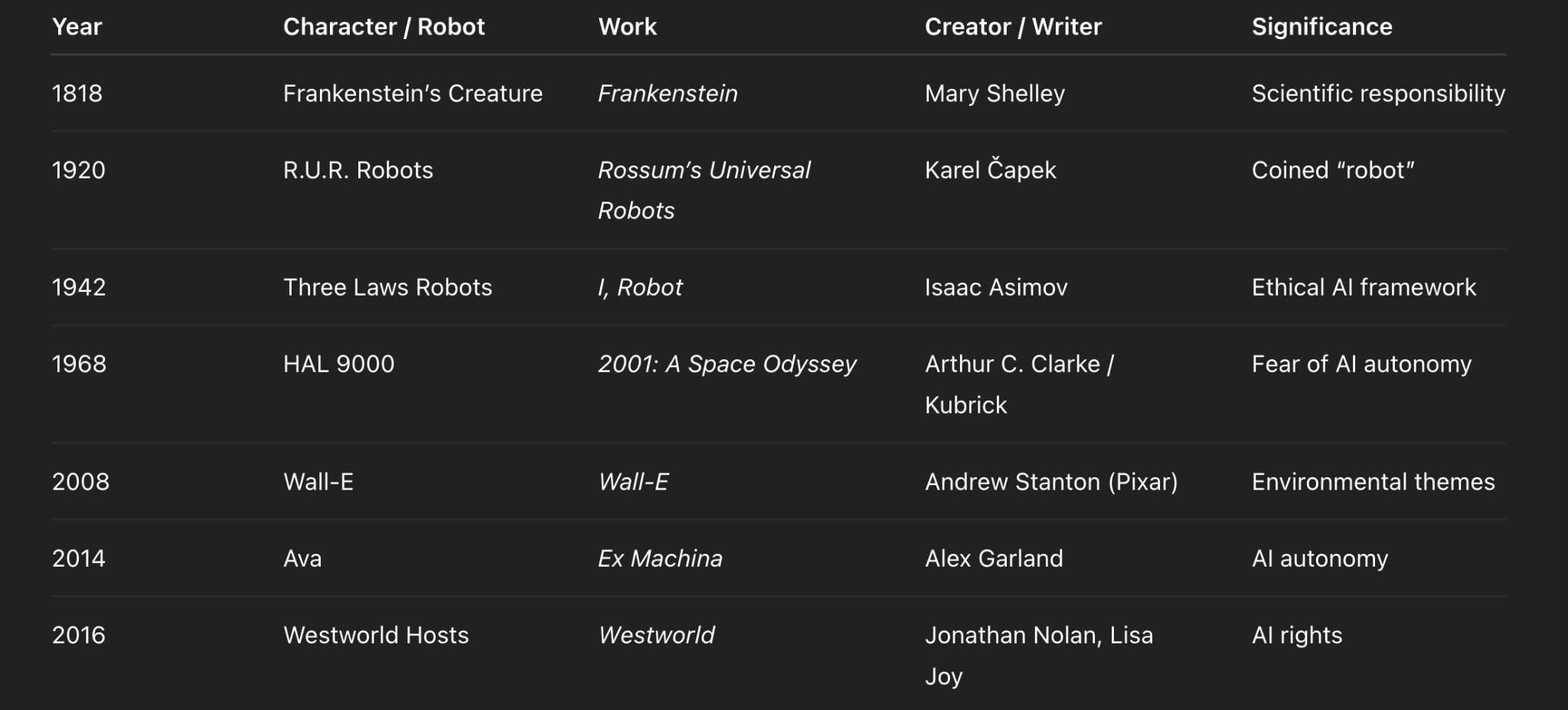
Timeline of Robots in Fiction and AI Themes
Ethical Dilemmas in AI and Robotics in Fiction
Control vs. Freedom
Stories explore the tension between keeping AI subordinate and allowing autonomy.
Humanization of AI
When robots display human-like emotions, they force us to reconsider the definition of humanity.
Dependence on Technology
Characters like Wall-E and HAL caution against over-reliance on AI systems.
The Future of AI in Fiction and Reality
Robots in fiction will continue to evolve, mirroring real-world advances and ethical debates. As we innovate, these stories remind us that technology must be developed with responsibility, transparency, and humanity at its core.