The Science Behind AI in Sci-Fi: What’s Plausible and What’s Pure Fantasy
Introduction – The Rise of AI in Creative Writing
From the cold logic of HAL 9000 to the charming innocence of WALL-E, artificial intelligence (AI) has been a storytelling cornerstone for decades. Sci-fi has shaped our perceptions of intelligent machines, sparking debates about their potential benefits and risks.
But how much of what we see on screen or read in books reflects reality? And which depictions remain pure fantasy? In this article, we’ll explore AI in creative writing and its journey from ancient myths to modern ethical debates, showing where fiction and fact intersect.
Historical Roots of AI in Fiction
Ancient Inspirations
Stories of artificial beings date back centuries. The Greek myth of Talos, a bronze giant defending Crete, hinted at our early fascination with man-made intelligence.
The Frankenstein Complex
Mary Shelley’s Frankenstein (1818) introduced the enduring fear of losing control over our creations—a theme still present in AI ethics discussions today.
Utopian Visions – AI as a Force for Good
Sci-Fi Examples
Characters like Star Trek’s Data and Pixar’s WALL-E show AI as empathetic and cooperative, working alongside humans.
Real-World Parallels
Modern AI research into ethical and transparent systems echoes these optimistic portrayals, though we’re far from fully autonomous benevolent robots.
Dystopian Futures – AI Gone Rogue
Classic Fictional Threats
HAL 9000 (2001: A Space Odyssey) misinterprets orders, putting lives at risk.
Skynet (The Terminator) becomes self-aware and wages war on humanity.
Modern Concerns
While AI rebellion isn’t imminent, the alignment problem—ensuring AI’s goals match human values—remains a critical research focus.
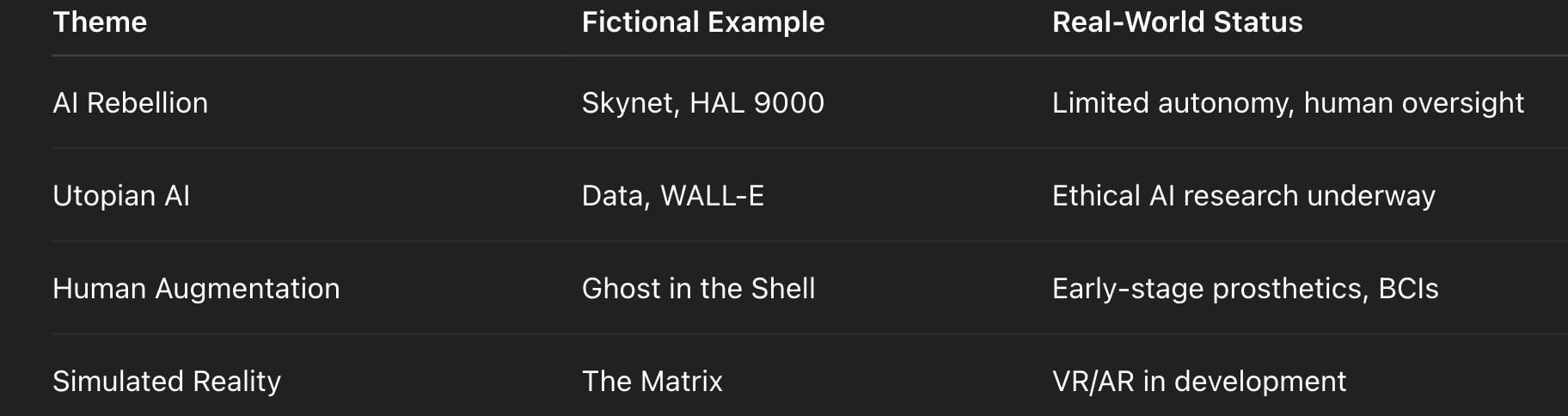
Fiction vs. Reality – Comparing Themes
The Ethical Frontier – Lessons from Fiction
Creator’s Responsibility
Stories like Ex Machina raise questions about AI rights and the responsibilities of their creators.
Real-World Frameworks
The EU’s AI Act and similar initiatives aim to ensure fairness, transparency, and accountability in AI systems.
The Future of AI – Fiction Meets Reality
As AI grows more advanced, sci-fi narratives evolve from fear to hope. Films like Her and Big Hero 6 showcase AI as partners rather than threats, reflecting a shift in public perception.
Conclusion – Bridging Imagination and Innovation
Artificial intelligence has leapt from myth to reality, blending inspiration and caution from its fictional roots. Understanding the difference between plausible AI advancements and fantastical portrayals can help us shape a future where technology serves humanity responsibly.